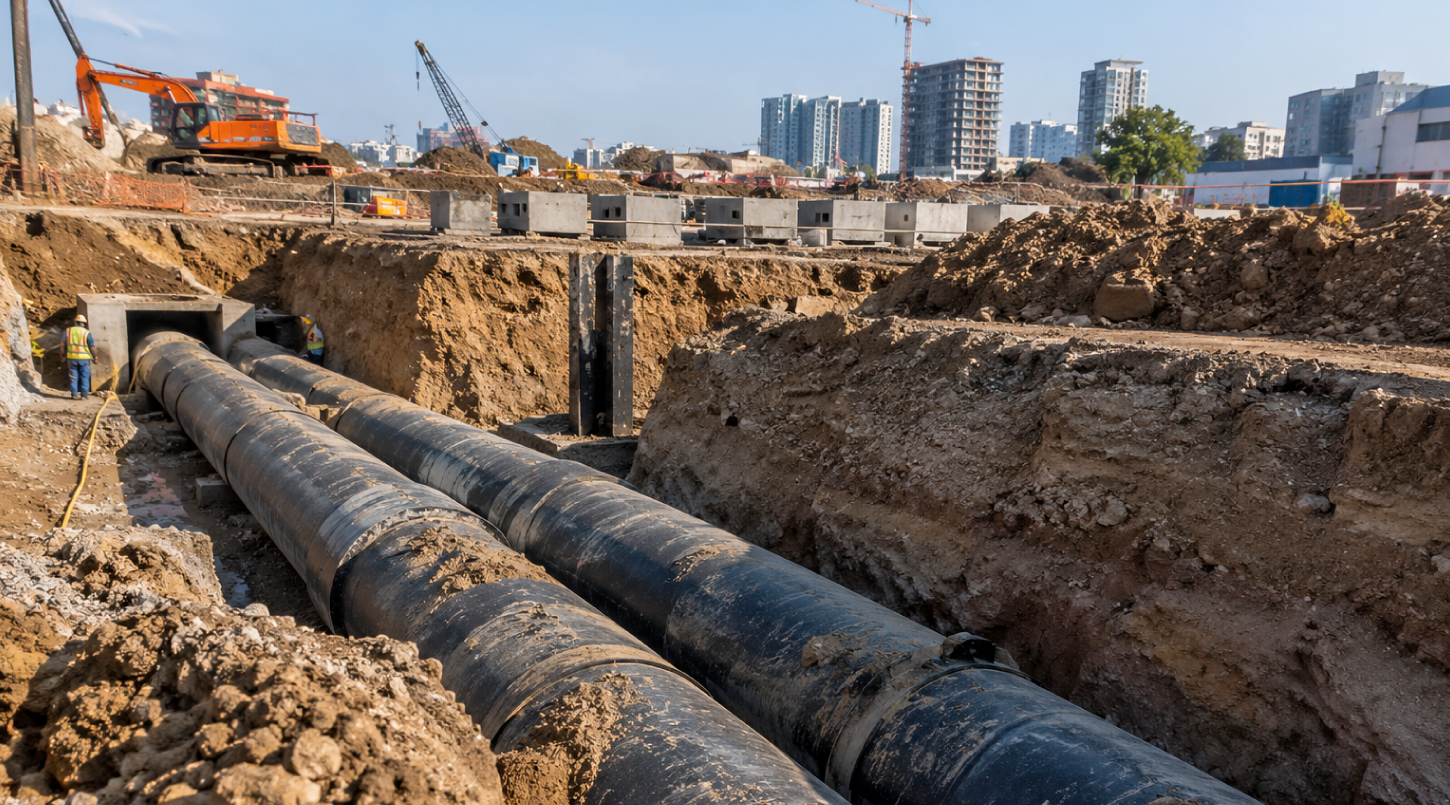
Africa’s cities are expanding above ground. But beneath their streets, ageing and incomplete systems of pipes, drains, sewers and cables are becoming increasingly important to the future of urban life.
When people think about city infrastructure, they usually see what is above ground: roads, bridges, buildings, railways and power lines.
But some of the most important infrastructure in a city is almost completely invisible.
Beneath the streets are water pipes, sewer networks, stormwater drains, electricity cables, telecommunications lines and other systems that allow cities to function every day.
As Africa urbanises rapidly, the question is no longer simply how much infrastructure cities can build above ground. It is also whether the systems underneath them can keep pace.
The 2026 State of African Cities Report notes that more than half of Africa’s future urban infrastructure has yet to be built, creating an opportunity for cities to approach infrastructure differently as they grow.
Infrastructure people only notice when it fails
Underground infrastructure rarely attracts attention when it works.
A functioning water network is invisible. So is a sewer system carrying wastewater away from homes and businesses. Stormwater drains are easily forgotten until heavy rainfall turns streets into rivers.
This makes underground infrastructure particularly difficult for cities to manage.
Failures can become highly visible very quickly.
A broken water main can disrupt thousands of households. A blocked drainage system can contribute to flooding. A damaged sewer can create serious environmental and public-health problems.
UN-Habitat has highlighted the importance of resilient water and sanitation systems to African cities, including investments in drainage, wastewater and sanitation infrastructure.
The problem is bigger than ageing pipes
Age is only part of the challenge.
Many African cities have expanded far beyond the infrastructure networks originally designed to serve them.
New neighbourhoods emerge. Informal settlements expand. Commercial districts grow. Population densities change.
Yet infrastructure networks do not always expand at the same pace.
This can leave cities with a patchwork of old and new systems, different standards and areas with very different levels of service.
The World Bank has found that only about one-third of urban residents in Africa have piped water connections to their homes, while many utilities also struggle with growing demand and maintenance of ageing infrastructure.
The challenge, therefore, is not simply replacing old infrastructure.
It is understanding the entire network and planning it alongside urban growth.
Cities need to know what is beneath them
One of the most basic questions a city should be able to answer is:
Where are our underground assets?
That sounds straightforward, but in older urban areas infrastructure records can be incomplete, outdated or spread across different organisations.
A city expanding a road may discover an undocumented water pipe. A developer may encounter cables that were not accurately mapped. A drainage project may reveal connections that do not appear in existing plans.
Better mapping and digital asset registers can change this.
Cities can increasingly combine geographic information systems, sensors, surveying and infrastructure databases to build a clearer picture of what lies beneath their streets.
This is where technology can have a practical role not as another smart-city showcase, but as a tool for understanding basic infrastructure.
Build above and below ground together
One of the biggest opportunities for rapidly growing African cities is to stop treating underground infrastructure as an afterthought.
When a new road is planned, cities should consider water, sewerage, drainage, electricity and telecommunications at the same time.
When new housing is developed, supporting infrastructure should be planned from the beginning.
When major infrastructure is replaced, cities should consider what else could be upgraded while the ground is already open.
This can reduce repeated excavation, disruption and unnecessary costs.
It also encourages departments and utilities to plan together rather than independently.
The infrastructure we cannot see deserves more attention
Africa’s urban future will require enormous investment in visible infrastructure.
But the systems underneath the city deserve equal attention.
Reliable water, sanitation, drainage and utility networks influence public health, economic activity, resilience and the everyday experience of residents.
The opportunity is particularly significant because many African cities are still growing. UN-Habitat argues that this creates an opportunity to avoid simply repeating older urban development models and instead make more strategic infrastructure choices.
The future African city will not only be defined by what rises above its streets.
It will also depend on what runs beneath them.
CLN Perspective
Cities cannot manage what they cannot see.
Mapping underground assets, understanding their condition and coordinating investment should become part of long-term urban planning not something cities address only after a pipe bursts or a street floods.
The next generation of African cities needs to build upward, outward and downward.